Prescription Drug Spending and the U.S. Health Spending Gap Compared with OECD Countries
How prescription drugs compare with other healthcare costs in U.S. health spending differences across OECD countries.
Debates about U.S. health care costs often focus on prescription drug spending. However, prescription drugs account for only a small portion of the overall spending difference between the United States and comparable OECD countries.
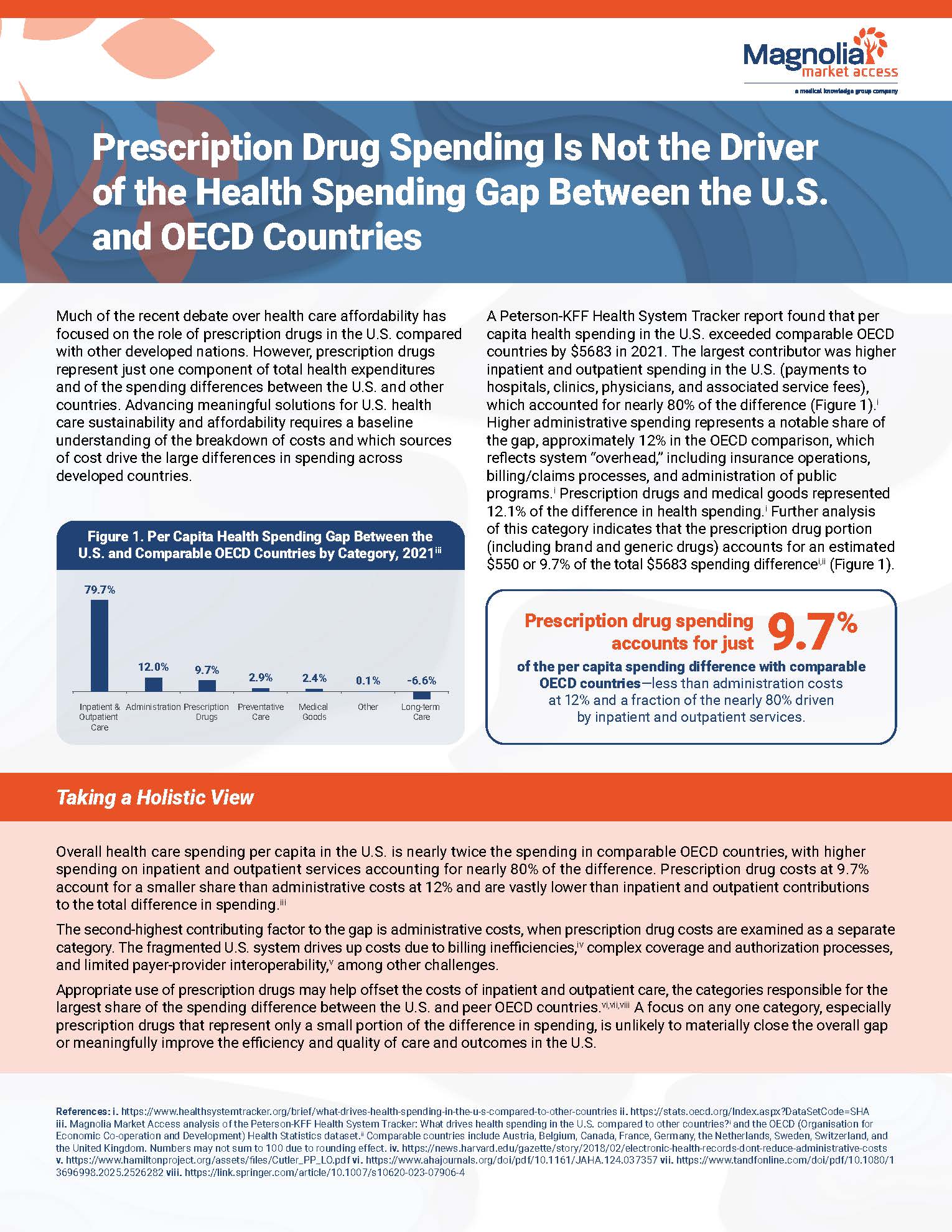
Building on a Peterson-KFF Health System Tracker study of U.S.–OECD health spending differences, this analysis finds that prescription drugs account for 9.7% of the per-capita health spending gap, contributing far less to the difference than inpatient and outpatient care and less than administrative costs. This brief reviews how different categories of health care spending contribute to the overall gap.
Key Findings include:
- Prescription drug spending accounts for just 9.7% of the $5,683 per capita health spending gap between the U.S. and comparable OECD countries, equating to an estimated $550 difference.
- This 9.7% share is lower than the 12% contributed by administrative costs and far less than the nearly 80% driven by inpatient and outpatient care.
- Focusing solely on prescription drugs, which represent a small portion of the spending gap, is unlikely to significantly close the overall difference or improve U.S. health care efficiency, quality of care, or outcomes.
Download the full report to explore the data behind these findings and the broader drivers of health spending differences between the United States and OECD countries.