
Patient Support Services Modeling, Made Actionable
A data-driven approach to patient support services modeling that helps manufacturers forecast demand, evaluate program design, and manage affordability, access, and cost with confidence.
Prescription drugs represent only a small portion of the overall difference in health care spending between the United States and comparable OECD countries. In 2021, prescription drug spending accounted for approximately $550, or 9.7%, of the $5,683 per capita spending gap, while inpatient and outpatient services accounted for nearly 80% of the difference. Administrative costs represented about 12% of the gap, highlighting the significant role of system complexity and operational overhead in driving higher U.S. health care spending.
The 2026 Medicare Part D redesign lowers some drug prices but shifts cost sharing. Coinsurance and higher deductibles may increase out-of-pocket costs for many beneficiaries.
Market access is increasingly shaping biopharma decisions earlier in the lifecycle. This article explores how policy uncertainty, evidence expectations, and access strategy are influencing development, investment, and long-term value realization.
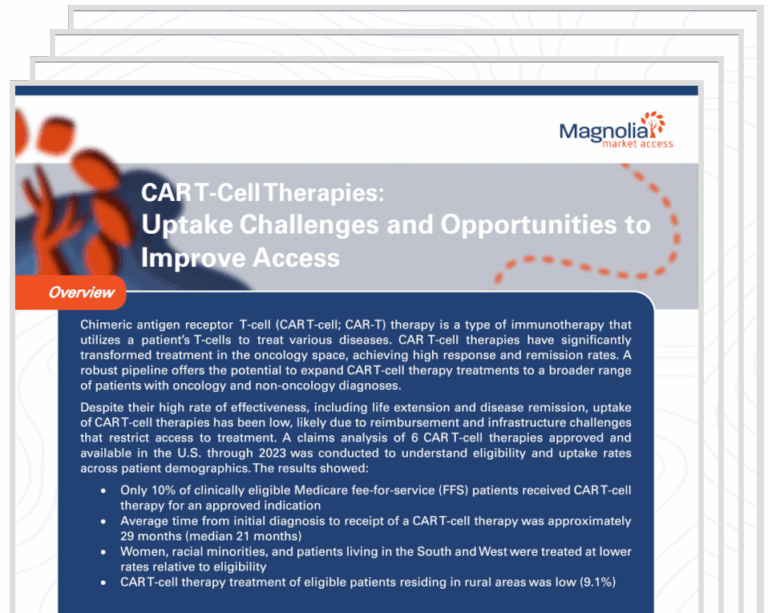
Magnolia Market Access examines the factors shaping access to chimeric antigen receptor T-cell (CAR-T) therapies in the Medicare fee-for-service population.
Congress is considering changes that would significantly alter how Pharmacy Benefit Managers (PBMs) are compensated in commercial insurance. See our report and full analysis.
How a pharmaceutical company built a compliant, scalable 340B contract pharmacy program.
Magnolia Market Access released its fifth iteration of the IRA Payer Insights Survey in the summer of 2025 to understand how the IRA will affect the Medicare Part D program, including beneficiary premiums, formulary coverage, and contract negotiations for manufacturers and payers.
Find out how one manufacturer turned formulary complexity and policy uncertainty into strategic advantage using Magnolia Market Access’ Part D Formulary Databook.
As Medicare Part D plans adopt stricter utilization management, raise cost-sharing, and adjust tier placements, manufacturers face growing challenges in maintaining access. A data-driven formulary coverage assessment helps teams evaluate product positioning, benchmark competitors, and prepare for policy impacts — turning complexity into actionable strategy.